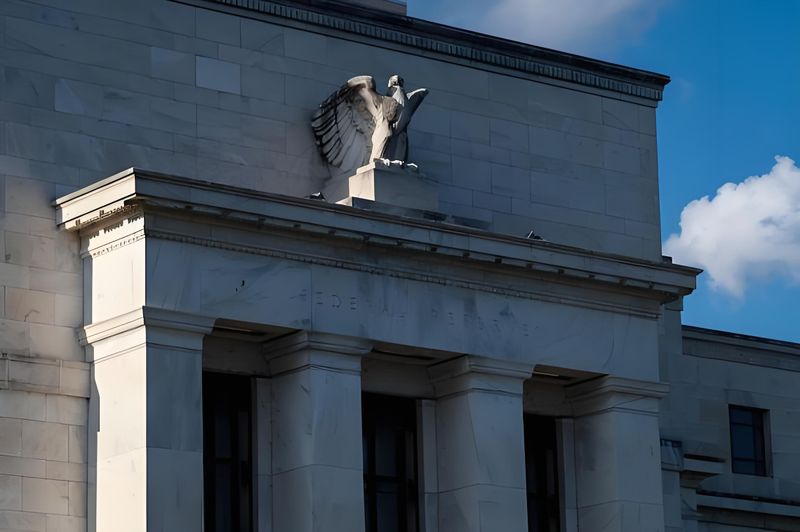
In this week's latest interest rate decision, the Federal Reserve announced that it would maintain the benchmark interest rate range, but at the same time issued a rare warning: the risks of rising inflation and unemployment are simultaneously increasing. This statement is seen by the market as the most complex policy challenge the Federal Reserve has faced in recent years, marking an unprecedented dilemma between its two statutory missions—price stability and employment promotion.
Structural Concerns Under the Facade of "Economic Expansion"
The Federal Reserve continued its description of "steady economic expansion" in its statement, but contradictions behind the data are accumulating. The decline in GDP in the first quarter was attributed to businesses and households stockpiling in advance to cope with tariffs, leading to a surge in imports. This "false prosperity" hides signs of inflationary pressures rising, especially under the backdrop of tariff increases by the Trump administration, where the prices of some consumer goods are on the rise.
Federal Reserve Chairman Powell stated in a press conference that there is currently no reason to adjust policy urgently, but emphasized that the stickiness of inflation and the sluggishness of the labor market cannot be ignored. He admitted that data in the coming months will be key to deciding whether to shift towards a rate cut.
Coexisting Risks of Employment and Inflation Leave the Federal Reserve in a Bind
As a central bank that balances prices and employment, the Federal Reserve is currently facing the risk of "stagflation": if there is a simultaneous rise in inflation and deterioration of employment, traditional policy tools may struggle to address the issue.
Inflation imported through tariffs, along with fluctuations in oil and raw material prices, means that even if faced with rising unemployment, the Federal Reserve may find it difficult to quickly cut rates. Goldman Sachs analyst Ashish Shah pointed out that unless employment data shows significant deterioration, rate cuts may not come early; conversely, if inflation rears again, the Federal Reserve may be forced to remain on hold or even reconsider raising rates.
Increasing Disconnect Between Market Expectations and Policy Reality
After the announcement, the market had a brief reaction: U.S. stocks ended higher after fluctuations, the yield on 10-year U.S. Treasury bonds declined slightly, and the dollar index briefly strengthened. Investors are still betting that the Federal Reserve will initiate rate cuts in July or September.
However, within the Federal Reserve, there is a more cautious attitude. Powell is attempting to "wait and see" to buy more time for data collection, paying particular attention to the actual impact of summer tariff policies. Meanwhile, the "dot plot" shows that there is a division among officials regarding the number of rate cuts expected this year, with hawkish members increasingly skeptical of a 50-basis-point cut path.
Seema Shah from Principal Asset Management believes the Federal Reserve has been cornered by the Trump administration's policy options, wavering between political pressure and economic realities.
September Rate Cut Window Still Open, but Path Narrowing
Several institutions, including PIMCO and Allspring, project that the Federal Reserve may start cutting rates in September or later, with the pace of rate cuts dominated by trends in employment and inflation. Matthias Scheiber, Allspring’s Multi-Asset Head, stated: “The interest rate market currently expects the Federal Reserve rate to fall to around 3.6% by the end of 2025.” However, this forecast heavily depends on achieving a balance between inflation and economic growth.
He noted that if growth remains sluggish while inflation stabilizes, the Federal Reserve will have room to support the economy. However, if price increases continue to disturb the market, the timing of rate cuts will still be delayed.
Risk Warning: Federal Reserve at a "Crossroads"
Looking back at history, there are profound lessons from the Federal Reserve’s policy missteps during the stagflation period of the 1970s. Now, despite more mature policy tools, the Fed is still facing extreme challenges due to external variables such as debt pressure, fiscal deficits, and geopolitical risks.
Bill Zox from Brandywine Global warns that if the Federal Reserve shifts too early, it may trigger a sharp increase in U.S. Treasury yields, which in turn could harm the stability of financial markets. Investors need to closely monitor employment and inflation data in June and July and be wary of the development of two scenarios:
- If employment deteriorates significantly, the market will reflect easing expectations in advance, leading to a short-term rebound in risk assets;
- If both inflation and unemployment rise, the Fed may be forced to maintain high interest rates, and the market may face a "double blow" to stocks and bonds.
In this macroeconomic "fog," every statement and interpretation of data by the Federal Reserve is magnified by the market. The current stance of doing nothing seems like the last calm before the storm.