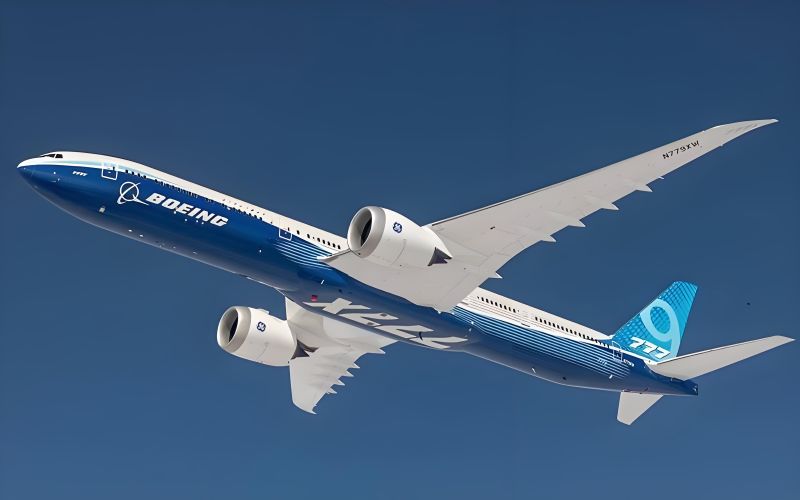
Boeing Secures Another Large Order
Turkish Airlines announced on Friday that it will purchase a total of 225 Boeing aircraft, including 75 wide-body B787 series and 150 narrow-body 737 MAX models. The agreement is seen as another significant transaction for Boeing in the international market in recent years, especially against the backdrop of longstanding safety controversies and delivery delays. This order aids the company in rebuilding trust with global airlines.
According to the statement from Turkish Airlines, 50 B787-9 and 25 B787-10 will be firm orders, with deliveries concentrated between 2029 and 2034. Of the 150 737-8/10 MAX, 100 are firm orders while the remaining 50 are options, with implementation pending negotiations with engine suppliers.
Engine Negotiations Remain a Key Obstacle
While the overall transaction has reached an agreement with Boeing on aircraft orders, engine supply remains an unresolved issue. Turkish Airlines is simultaneously negotiating with Rolls-Royce and GE Aviation under General Electric, involving a comprehensive package agreement covering the engine, spare engines, and maintenance services.
On the other hand, CFM International is the main engine supplier for the 737 MAX models, and Turkish Airlines' final order requires the completion of negotiations between the parties. Industry experts point out that such engine agreements typically involve contracts worth billions of dollars and include over a decade of after-sales support, significantly impacting the operational costs and maintenance capabilities of the airlines.
Political and Economic Dual Background
The timing of the order disclosure is quite symbolic. Just a day prior, Turkish President Erdogan and U.S. President Trump discussed energy procurement and defense equipment issues in their meeting. Trump publicly stated that if Turkey reduces its reliance on Russian energy, the U.S. might ease some sanctions and provide Ankara with the opportunity to purchase F-35 fighter jets.
Against this backdrop, Turkish Airlines' large order has been interpreted by outsiders as a signal of warming Turkey-U.S. relations. Analysts believe that this transaction is not only a commercial act but also carries diplomatic strategic significance.
Industry Competition and Fleet Update
For Turkish Airlines, this bulk purchase means that by 2035, its fleet will be almost entirely updated to new-generation, high-fuel-efficiency models. The company expects the renewal to support an annual passenger and freight growth rate of about 6%. This strategy aligns with its "global transfer hub" goal, particularly focusing on trancontinental routes centered in Istanbul.
Currently, Boeing and Airbus are fiercely competing in the global market. In recent years, the Airbus A321neo and A350 series have consistently led in order numbers. This large contract from Turkish Airlines is considered an important reversal in the competitive landscape for Boeing.
Future Outlook
As negotiations move into the engine phase, it remains uncertain whether the deal can smoothly come to fruition. If Rolls-Royce, GE, or CFM can reach favorable terms with Turkish Airlines, the order will inject much-needed vigor into the global aviation market and provide substantial support for Boeing's reputation restoration in the industry.
However, market observers caution that large orders often come with macroeconomic and geopolitical risks, especially amid fluctuating energy prices and international sanctions risk. Whether Turkish Airlines' expansion plans can be realized on schedule still requires time to test.