• Home
  • Categories
  • News
  • Community
EN
EN
Home
CategoriesNewsGlossaryCommunityAbout Us
Contact Us
Social Media
Region
🌏International
Region
🌏International

Copyright © 2023-2026 Traderknows Ltd. All rights reserved.

Contact
Home
/
News
/
U.S. agricultural export share is declining, and tariff policies may intensify competitive pressures

U.S. agricultural export share is declining, and tariff policies may intensify competitive pressures

TraderKnowsTraderKnows
2025-04-03
Summary:The global share of U.S. exports in corn, soybeans, and wheat continues to decline, and Trump's tariff policies could further weaken the competitiveness of American agricultural products in the global market.

2025.3.4 Grain

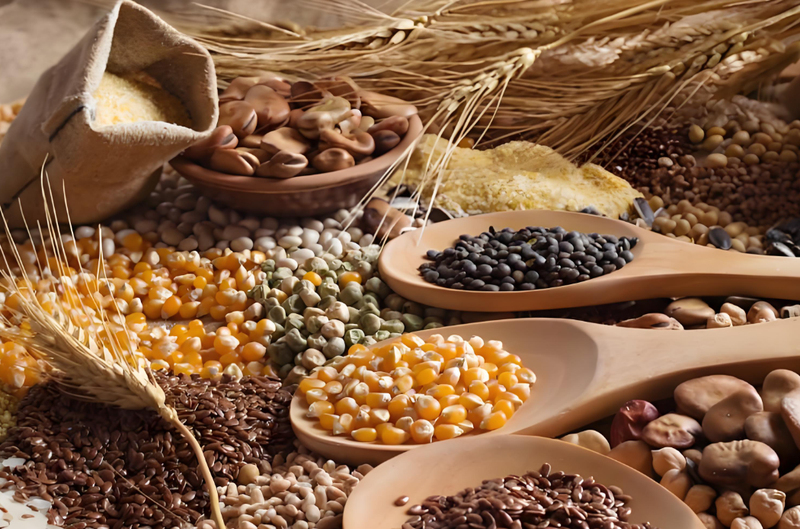
Although the United States currently remains the world's largest corn exporter, this position is increasingly threatened by competitors like Brazil. The U.S. global export shares of corn, soybeans, and wheat have dropped to historic lows, a trend that could be exacerbated with Trump's announcement of widespread retaliatory tariffs. While the majority of American farmers supported Trump in the last election, they are also aware that tariff policies might further weaken their competitiveness in the global market.

In recent years, the share of U.S. corn exports has been steadily declining, reaching a historic low of 31% five years ago. Compared to 61% twenty years ago, the decline is significant, especially during the late 2000s to early 2010s when the U.S. experienced the global financial crisis and a series of agricultural setbacks, affecting corn exports. Brazil's corn production and export capacity have rapidly increased over the past 20 years, with its share growing from 5% to 22%. This means Brazil's expansion has further eroded U.S. corn market share, intensifying competitive pressure.

Similarly, the U.S.'s dominance in the soybean market is being challenged. Once holding over 80% of the global soybean export share, the U.S. now accounts for only 27%. In contrast, Brazil became the world's largest soybean supplier in 2012-2013, with its share continuously rising. Currently, Brazil holds 55% of global soybean exports, far surpassing the U.S.

U.S. wheat exports are also experiencing a steep decline. While the U.S. was the world's largest wheat supplier in the 1980s, it has now fallen to fourth place, with a global market share of only 11%, down from 26% twenty years ago. This change starkly contrasts with the 1981 U.S. decision to cancel the grain export contract with the Soviet Union. Today, Russia has overtaken the U.S. as the world's largest wheat exporter.

A similar trend is seen in the U.S. agricultural production sector. The U.S. currently accounts for 31% of global corn production, down from 41% twenty years ago. Soybean production's global share has declined from over 50% to 28%. The situation with wheat is even more severe, currently accounting for only 6% of global production. In contrast, countries like Russia and Brazil have markedly improved their production levels, gradually seizing U.S. market share.

Russian wheat production has grown by more than 70% in the past decade, while Brazilian soybean and corn production have increased by 85% and 55% respectively. These countries have not only made breakthroughs in production capacity but also enhanced their competitiveness in the global agricultural market through optimized market strategies.

Trump's tariff policies could exacerbate these challenges, leading to a further shrinkage of the U.S. share in the global agricultural market. If U.S. agricultural exports face additional trade barriers, other supplier countries are likely to fill this gap. For American farmers, this means potentially facing more intense global competition and the uncertainties brought by changing market conditions.

As the U.S.'s position in the global agricultural supply chain continues to diminish and the competitiveness of other countries gradually strengthens, this serves as an important lesson for U.S. policymakers. The landscape of the global agricultural market is shifting, and how to maintain competitiveness and avoid being further replaced by other supplier countries will be a key challenge for future U.S. agricultural policy.


Business Cooperation Skype ENG

Business Cooperation Telegram Eng

Risk Warning and Disclaimer

The market carries risks, and investment should be cautious. This article does not constitute personal investment advice and has not taken into account individual users' specific investment goals, financial situations, or needs. Users should consider whether any opinions, viewpoints, or conclusions in this article are suitable for their particular circumstances. Investing based on this is at one's own responsibility.

The End
Previous
Next
Comments
0/1000
TraderKnows
Written byTraderKnows
Created date:2025-04-03 02:53
Last Updated:2025-04-03 04:30
Independent Analysis: Manually researched and fact-checked by the TraderKnows Compliance Team, based on public regulatory records.
Wiki
Options On Futures

Options on futures refer to financial derivatives that combine the characteristics of futures contracts and options contracts. They are based on the underlying assets of futures contracts (such as commodities, indices, exchange rates, etc.) and involve future delivery and the choice of rights.

Organization

Active

TraderKnowsTraderKnows
Recent Post

Gold Prices Hit 11-Week Low as US-Iran Tensions Fuel Oil Rally

5 hours ago

US Air Strikes on Iran Spark Hormuz Crisis; Spot Gold Drops Below 200-Day MA

5 hours ago

Why Didn't Oil Prices Hit $200 Despite 100-Day Hormuz Crisis? Global Buffers Revealed

5 hours ago

Price Volatility and Geopolitical Conflict Reshape China May Commodity Imports

5 hours ago

Reliance Partners with Meta for AI Data Center Boosting Indian Shares

5 hours ago

Asian Stocks Drop and Oil Rises as US-Iran Clashes Escalate Ahead of US CPI

5 hours ago

South Korea Clears $1.5 Billion SpaceX IPO-Related FX Demand as Regulators Step In

5 hours ago

Goldman Sachs Warns of AI Capex Shifting to Monetization, $100B Leverage Poses Market Risk

5 hours ago

Trump Warns Strait of Hormuz Could Be Blocked For Months If US-Iran Talks Fail

5 hours ago

Japan Bond Yields Rise as Hot Inflation Data Shadows Long-Term Debt Auction

5 hours ago

China Surpasses Japan as Saudi Arabia's Largest Auto Import Source

5 hours ago

China Bond Yields Reverse Early Decline as Fund Redemptions and Auction Cultivate Caution

5 hours ago

US May CPI Expected to Rise to 4.2% as Gasoline Prices Fuel Inflation Concerns

5 hours ago

US Expands DOD Chinese Military Companies List to Include Alibaba and BYD Market Reacts Mutedly

5 hours ago

Japan Bond Yields Rise as Inflation Shocks and 30-Year Auction Demand Hits One-Year Low

5 hours ago

Risk Warning

TraderKnows is a financial media platform, with information displayed coming from public networks or uploaded by users. TraderKnows does not endorse any trading platform or variety. We bear no responsibility for any trading disputes or losses arising from the use of this information. Please be aware that displayed information may be delayed, and users should independently verify it to ensure its accuracy.