
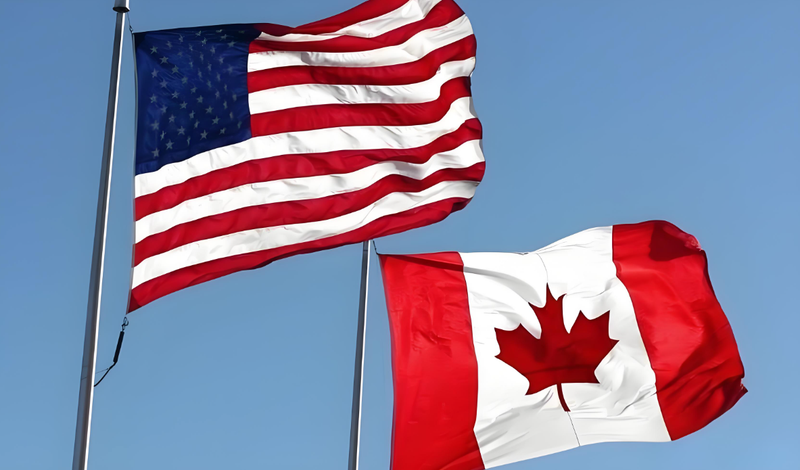
The Chill in US-Canada Trade Relations Resurfaces
Trade relations between the US and Canada have become tense once again, following President Trump’s announcement of a 35% tariff on Canadian goods starting in August 2025. This has placed the stability of trade within the North American Free Trade Zone into uncertainty.
Previously, Canada was one of the US’s most important trade partners, with significant volumes of trade spanning areas like automobiles, energy, agriculture, and manufacturing. The imposition of these tariffs will directly impact supply chains, increasing production and logistics costs for businesses and potentially raising retail prices for certain goods in the US.
Tariff Measures Trigger Exchange Rate and Market Volatility
Following Trump’s tariff announcement, the US dollar surged against the Canadian dollar, briefly surpassing the 1.37 mark, reflecting the market's sensitivity to the escalation in US-Canada trade tensions. The weakening of the Canadian dollar might make Canadian exports more price-competitive in the short term, but it also heightens market anxiety about the future trajectory of US-Canada trade.
Analysts suggest that if Canada retaliates with similar measures, it could exacerbate bilateral tensions and have long-lasting effects on North American manufacturing and component flows, affecting employment and investment confidence. Additionally, the devaluation of the Canadian dollar might lead to higher import prices within Canada, increasing inflationary pressures and posing challenges to the Bank of Canada’s future monetary policies.
Tariff Escalation Could Affect North American Supply Chain Stability
The North American supply chain is currently highly integrated, with the US and Canada serving as key suppliers and markets in industries such as automotive, energy, and agriculture. The sudden imposition of tariffs will disrupt cross-border logistics, increase transportation costs for raw materials and components, and may force businesses to reconsider their procurement and production strategies.
Some US-Canadian multinational corporations might face narrowing profit margins due to the tariff impact, which may compel them to relocate parts of their production back to the US to avoid tariff risks. However, adjusting production lines and reshaping supply chains require time and capital, increasing business uncertainty in the short term.
Canada May Retaliate, North American Trade Relations Under Test
While Canada has not officially responded yet, several economists have pointed out that Canada might impose retaliatory tariffs in response to the US measures. If Canada executes countermeasures, US exporters will face increased hurdles, particularly those in sectors like agriculture, machinery, and manufacturing that heavily rely on the Canadian market.
Since the Trump era, North American trade relations have endured multiple clashes and renegotiations, and the stability of the USMCA (United States-Mexico-Canada Agreement) is again under threat. This tariff escalation is not just an economic issue but could also become a political card ahead of the US elections, adding uncertainty to the future direction of North American trade relations.
Focus for the Future: CPI and the Federal Reserve's Attitude
As trade tensions heat up, the market will focus on the potential impact of tariffs on the inflation level in the US. If tariffs lead to higher overall prices by increasing the cost of goods, this will affect the Federal Reserve’s monetary policy decisions in the coming months.
Analysts expect that if inflationary pressures mount due to trade tensions, this could limit the Fed's capacity to cut interest rates within the year, while also affecting capital flows and currency stability, further influencing precious metals and stock market performance.
Market to Enter Observation Period
President Trump’s decision to impose a 35% tariff on Canadian goods implies a possible new adjustment cycle in North American trade relations. Investors should monitor any response measures Canada might adopt, as well as the tangible impact of this tariff escalation on the North American supply chain, manufacturing costs, and the job market. Furthermore, changes in inflation expectations resulting from the tariffs will have a profound influence on Federal Reserve policy outlooks and global capital markets, with market sentiment likely remaining cautious in the near term.

