Japanese policymakers believe that China's deepening economic woes could undermine Japan's fragile economic recovery, particularly if China fails to boost demand through meaningful stimulus measures, potentially delaying the Bank of Japan's exit from its ultra-loose monetary policy.
Against the backdrop of significant interest rate hikes by the Federal Reserve cooling off US economic growth, a downturn in China's economy would force export-dependent Japan to lose more external support. Sources familiar with the Bank of Japan indicate that risks from China will be a key topic at the BOJ's September policy meeting, sparking widespread questions about Governor Kazuo Ueda's strategy to exit ultra-loose monetary policy.
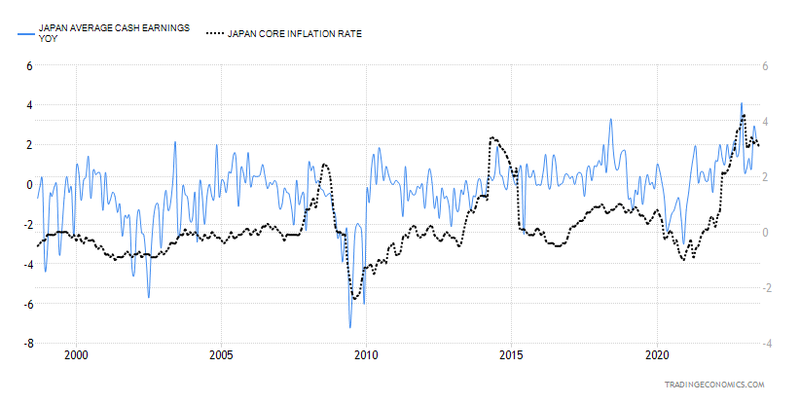
Sources note that developments in China could deal a significant blow to Japan's economy, potentially hindering Japan's goal of achieving sustained wage growth, which is a crucial condition for gradually moving away from ultra-loose monetary policy.
In its August economic report, the Japanese government hinted at concerns over China's economic outlook, which is seen as one of the risks facing Japan’s economic recovery. A senior Japanese government official expressed a radical viewpoint, suggesting that China is no longer the driving force of global economic growth and that a 5% growth target may become an elusive vision.
Although recent stimulus measures implemented by China have led Japanese policymakers to expect that China will avoid a recession, Japan's leadership still views the risks from China as significant. Therefore, after adjusting its yield curve control (YCC) policy in July, financial markets widely anticipate that the Bank of Japan will maintain its current monetary policy unchanged at its September meeting.
China became Japan's largest trading partner in 2020, accounting for 20% of Japan's total exports. Data shows that Japan's exports to China fell by 8.6% in the first half of the year due to shrinking demand for automobiles, steel, and electronic products from China.
For Japanese companies, China's appeal as a production hub is waning, with some businesses, like Komatsu Ltd, the world's second-largest manufacturer of construction machinery, beginning to reduce their operations and capacity to match actual demand within China, as stated by CEO Hiroyuki Ogawa.
Economists believe that a slump in China's economy could reduce Japan's annual growth rate by 1-2 percentage points, heightening market concerns about a long-term slowdown in economic growth for both countries. China and Japan are Asia's largest economies, together accounting for about a fifth of the global GDP.
The risks from China intensify the challenge for the Bank of Japan in adjusting its YCC policy, a key part of its monetary policy aimed at sustaining the revival of stagnant consumer demand.
Japan's core inflation rate reached 3.1% in July, exceeding the Bank of Japan's target of 2% for the 16th consecutive month, increasing the likelihood of the BOJ exiting its ultra-loose monetary policy. However, according to Toru Suehiro, chief economist at Daiwa Securities, weak demand from China and adverse factors affecting inbound tourism could suggest that the BOJ need not rush to tighten its current monetary policy.
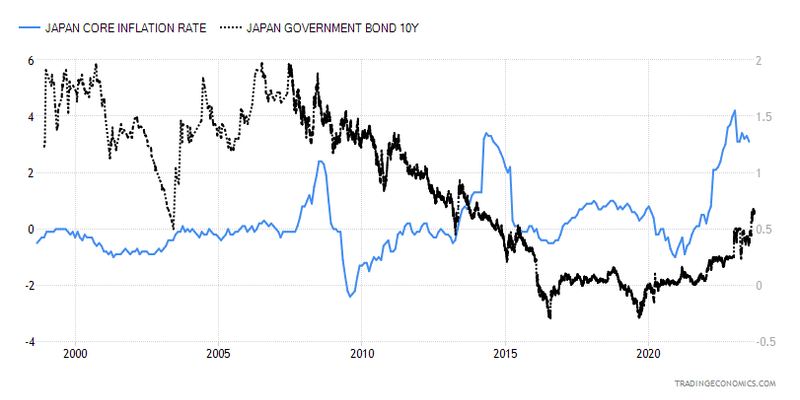
Recently, despite frequent hints of policy changes by some members of the Bank of Japan, Kazuo Ueda emphasized the need to wait until domestic demand and wage growth replace import costs as the key factors driving continuous price increases.
Last month, BOJ board member Toyoaki Nakamura pointed out that China's high unemployment rate and shrinking investments are concerning roots. The contraction of demand from China could pressure profits for Japanese companies and hinder their ability to fulfill wage increase promises.
Data shows that Japan's household spending in July saw its largest drop in almost two and a half years, indicating that rising inflation has impacted consumption. Analysts expect that after strong growth in the second quarter, Japan's economic growth momentum could slow down in the third and fourth quarters, increasing uncertainties over whether the trend of spiraling wage-inflation can continue.