Another Phone Call Amid Tariff Pressure
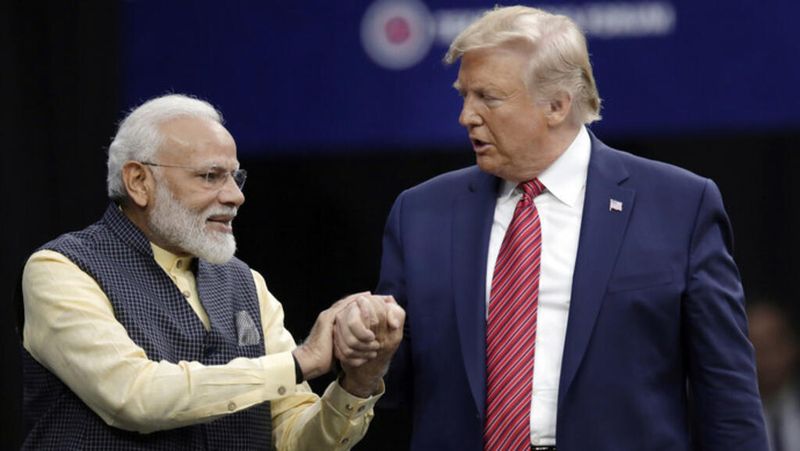
Indian Prime Minister Modi confirmed on Thursday that he had a phone conversation with U.S. President Trump. This marks the third direct dialogue between the two sides since the U.S. significantly increased tariffs on Indian goods. New Delhi hopes to use this opportunity to ease trade tensions and urge Washington to reconsider the high tariffs on certain Indian exports.
On social platforms, Modi stated that both sides reviewed the development of bilateral relations and exchanged views on regional and international situations. He described the conversation as "positive and in-depth," emphasizing that the two countries still share common interests in maintaining global peace and stability.
High Tariffs Impact Indian Exports
India-U.S. relations have been under pressure recently, with the core conflict centered around trade. Previously, the U.S. raised import tariffs on certain Indian goods to as high as 50%, causing a significant impact on India's export-oriented industries. Textiles, chemical products, and food exports, particularly shrimp, are at the forefront, with related businesses facing pressure from reduced orders and rising costs.
There is a widespread belief within the Indian government that such high tariffs exceed the scope of normal trade disputes, affecting not only business operations but also posing potential risks to employment and foreign exchange earnings. This is an important context for Modi's ongoing direct communication with Trump.
Continued Contact After Broken Negotiations
India-U.S. trade negotiations stalled at the end of July. The main reason for the deadlock was India's refusal to further open its market to U.S. agricultural products and not accepting the statements from Trump regarding its role in regional conflicts. These differences made it difficult for the two sides to reach a comprehensive agreement in the short term.
Nevertheless, both sides have not completely closed communication channels. Modi has repeatedly emphasized that India is still willing to advance negotiations based on mutual respect, while the U.S. has also sent signals to continue talks through different levels of engagement.
U.S. Representative's Visit Signals Easing Tensions
While Modi and Trump were having their conversation, the U.S. Deputy Trade Representative was in New Delhi for a two-day visit. This arrangement is seen as an important move by Washington to stabilize bilateral relations. Officials are expected to engage in technical discussions about tariff arrangements, market access, and future cooperation frameworks.
Analysts point out that the visit of a high-level U.S. trade official indicates that the U.S. does not wish for the economic and trade relationship with India to spiral out of control. Amidst the current tight global supply chain conditions, India remains an important economic partner for the U.S. in Asia.
Interwoven Geopolitical and Economic Factors
Besides trade issues, the conversation also covered broader regional and international matters. India and the U.S. share some consensus on topics such as the Indo-Pacific region, security cooperation, and global governance, providing a buffer for bilateral relations that goes beyond tariff disputes.
However, the realities remain complex. On one hand, India hopes to alleviate export pressure through diplomatic efforts; on the other hand, the Trump administration maintains a tough stance on trade issues to address domestic political and industrial demands. Such structural contradictions limit the likelihood of significant breakthroughs in the short term.
Uncertainty About Future Developments
Overall, the third phone call between Modi and Trump reflects more of a desire to "control the temperature" rather than immediately resolve differences. Intensive high-level communication helps prevent relations from deteriorating further, but whether tariffs will be reduced or negotiations can get back on track still depends on subsequent technical discussions and political judgments.
In the persistently turbulent global trade environment, the direction of India-U.S. relations not only concerns the interests of the two countries but also has spillover effects on the regional economic structure. In the coming weeks, the policy signals released by both sides might be key to determining whether there can be a turning point in this relationship.